Office health advice often turns into a hunt for the perfect chair, the perfect monitor height, and the perfect posture. Those details matter at the margin, but they miss the main exposure: holding one shape for hours. A body tolerates many positions; it dislikes being asked to stay in just one.
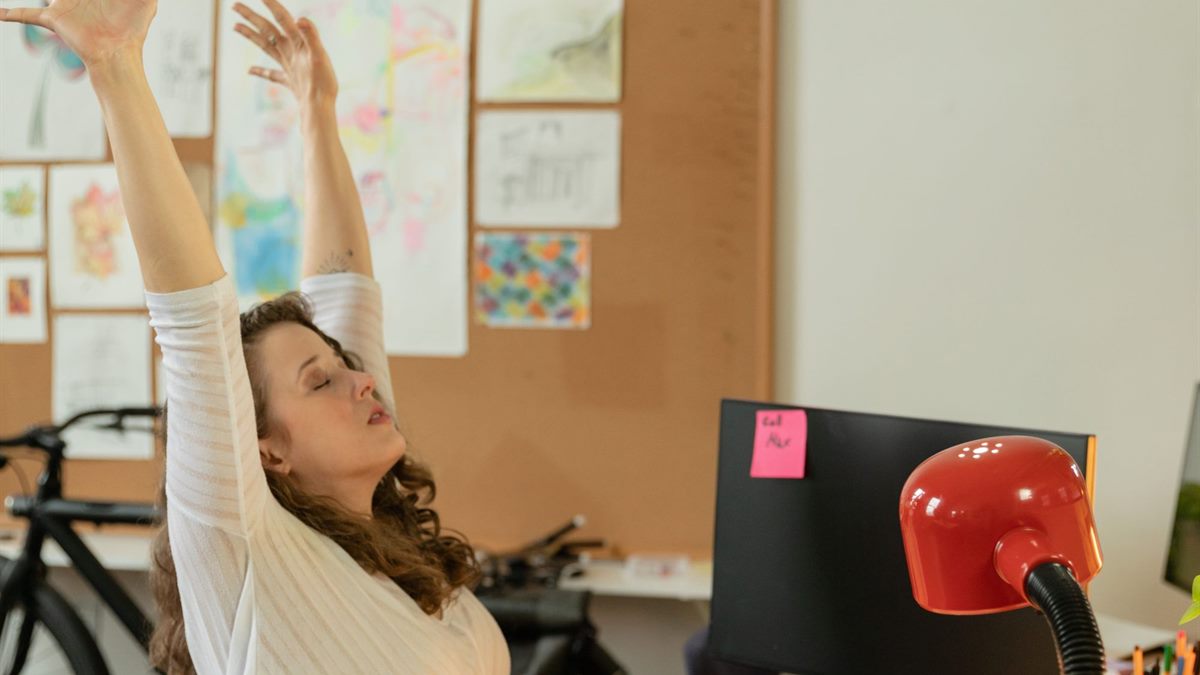
Why the timer matters more than the stretch
Stretching once at the end of the day does not undo eight hours of stillness. The useful unit is a short break repeated often. Aim to stand or move for two or three minutes roughly every 45 to 60 minutes. That is enough to change joint angle, restore blood flow to the legs, and interrupt the low-level stiffness that builds through the afternoon.
You do not need a routine with twelve exercises. A single walk to fill a glass, a few slow squats, or a shoulder circle is a legitimate break. The point is frequency, not choreography.
A two-minute reset you can do anywhere
Use this when you have no mat, no gym clothes, and no privacy. Do each movement slowly for about twenty seconds, and stop before anything pinches:
- Stand and roll your shoulders back five times.
- Turn your head gently left and right, pausing at the end range.
- Reach both arms overhead and take one long breath.
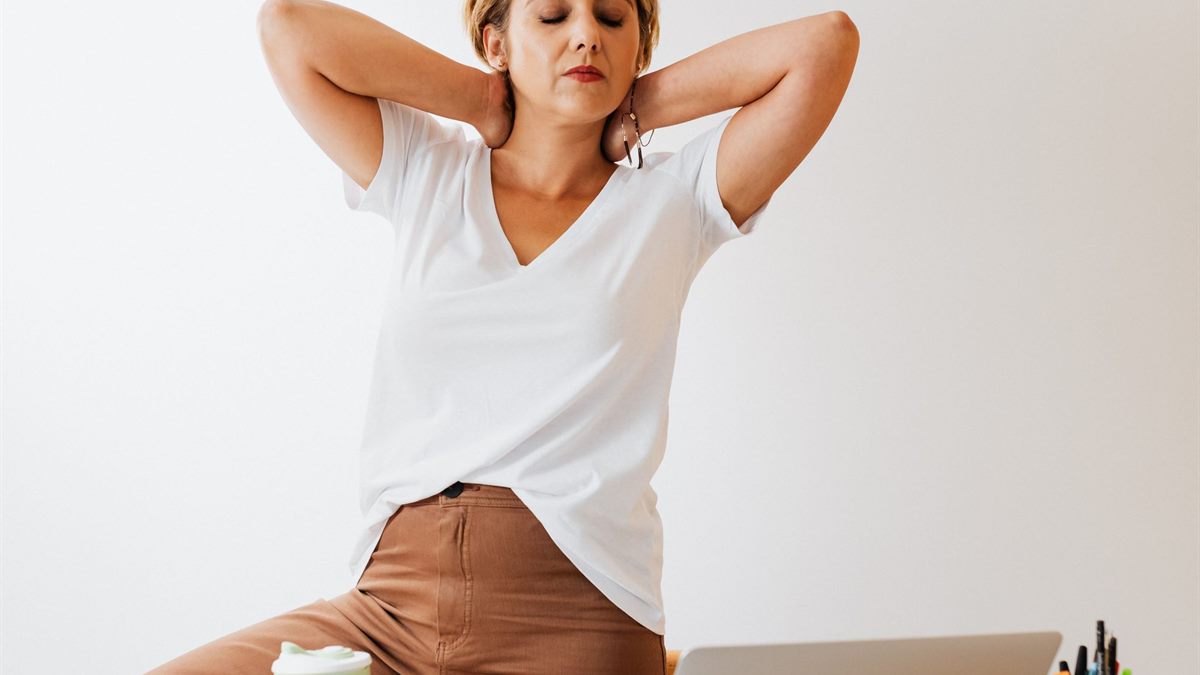
- Place your hands on your hips and lean back slightly, then return.
- Do five slow sit-to-stands from the edge of the chair.
- Walk to the furthest water source you can justify.
That is the entire plan. If it feels too easy, it is probably sustainable, which is the only standard that matters over a working year.
Set up the desk so breaks are easier
Small setup choices decide whether you move or stay stuck. Keep the water bottle small enough that you finish it and refill it. Put the bin slightly out of reach. Take personal calls standing. Angle the screen so you are not locked into a forward head position for the whole day, and keep the mouse close enough that your shoulder does not drift forward.
If you can, alternate between sitting and standing for blocks of work rather than standing all day. Static standing brings its own fatigue. Alternation is the point.
Posture is a range, not a pose
There is no single correct posture that protects everyone. Comfortable slouching is not automatically harmful, and rigidly held upright posture can create its own tension. The practical rule is variety: change position before discomfort arrives, and let the chair support you instead of treating it as a test of willpower.
Strength work helps here. A few weekly sets of rows, carries, and hip hinges make long desk days easier to tolerate. That is a reason to train, not a reason to replace movement breaks with exercise.
When desk pain is not a desk problem
Persistent numbness, weakness, or pain that wakes you at night deserves a proper assessment. Movement breaks are not a treatment for a nerve or joint issue. If symptoms are spreading down an arm or leg, or if you have lost strength, stop self-managing and see a clinician.
For the days you can get outside, pair these resets with a walking habit from how many steps a day actually matter. The Mayo Clinic also has a short office-exercise reference if you want more movement options.
Frequently asked questions
How often should I get up from my desk?
Roughly every 45 to 60 minutes, for two or three minutes. The exact interval matters less than interrupting long unbroken blocks of sitting most days.
Is standing all day better than sitting?
No. Standing all day creates different fatigue and does not automatically improve health. Alternating between sitting, standing, and walking is more comfortable and more sustainable.
Do I need to stretch to fix bad posture?
Not necessarily. Posture varies by person and task. Changing position regularly and staying strong enough to tolerate different shapes matters more than forcing one ideal alignment.
Can desk breaks replace exercise?
No. Short breaks reduce stillness but do not provide the same stimulus as planned strength or cardio training. They complement a training week rather than replace it.
Read next
How Many Steps a Day Actually Matter?
Ten thousand is a memorable number, not a medical threshold. The useful target is the one you can repeat on a normal weekday and raise slowly.